Module 1: Introduction to Sustainable Facility Management
Explore the importance of sustainable practices in modern facility management. Learn about green building certifications and industry standards.
This course is designed for facility managers and professionals looking to integrate sustainable practices into their management strategies. Learn how to create environmentally-friendly and cost-effective facilities, setting you apart in the industry. Participants will gain practical skills and knowledge to lead sustainable facility initiatives effectively.
4.9/5
|362 reviews
|1,248 students enrolled
Comprehensive, industry-recognized certification that enhances your professional credentials
Self-paced online learning with 24/7 access to course materials for maximum flexibility
Practical knowledge and skills that can be immediately applied in your workplace
Explore the importance of sustainable practices in modern facility management. Learn about green building certifications and industry standards.
Focus on optimizing energy consumption and resource utilization in facility operations. Understand renewable energy sources and efficiency measures.
Learn effective waste management strategies to minimize environmental impact. Explore recycling programs and sustainable waste disposal methods.
Enhance occupant health and comfort through indoor air quality and green building design principles. Create healthy work environments.
Integrate sustainable practices into daily facility operations. Manage sustainability programs and monitor environmental performance.
Explore advanced technologies and innovations in green building design and operation. Implement smart solutions for energy efficiency.
This programme includes comprehensive study materials designed to support your learning journey and offers maximum flexibility, allowing you to study at your own pace and at a time that suits you best.
You will have access to online podcasts with expert audio commentary.
In addition, you'll benefit from student support via automatic live chat.
Assessments for the programme are conducted online through multiple-choice questions that are carefully designed to evaluate your understanding of the course content.
These assessments are time-bound, encouraging learners to think critically and manage their time effectively while demonstrating their knowledge in a structured and efficient manner.
The field of sustainable facility management offers diverse career paths with a focus on environmental stewardship and operational efficiency. Professionals can contribute to sustainable development goals and lead green initiatives in various industries.
Career progression in sustainable facility management includes roles such as sustainability manager, green building consultant, energy efficiency specialist, and environmental compliance officer. Continued professional development and certifications enhance career prospects in this growing field.
Oversees sustainability initiatives and environmental programs within facilities
Advises on sustainable building practices and certifications for construction projects
Analyzes energy usage data and recommends efficiency improvements for buildings
Professionals in sustainable facility management benefit from networking opportunities with industry experts, pursuing advanced professional certifications such as LEED accreditation, exploring further education paths in sustainable design or environmental management, and gaining industry recognition for sustainable achievements.
Facilities Manager
"I learned how to optimize energy efficiency in facilities and reduce our carbon footprint, making a tangible impact on sustainability goals."
Building Operations Supervisor
"This course provided me with practical strategies for waste management and recycling in facilities, enhancing our environmental initiatives."
Real Estate Developer
"Implementing sustainable practices learned in this course has not only reduced costs but also improved occupant health through green building strategies."
Facility Engineer
"I now have the knowledge to develop effective strategies for waste management and recycling, contributing to a more sustainable future for our facilities."
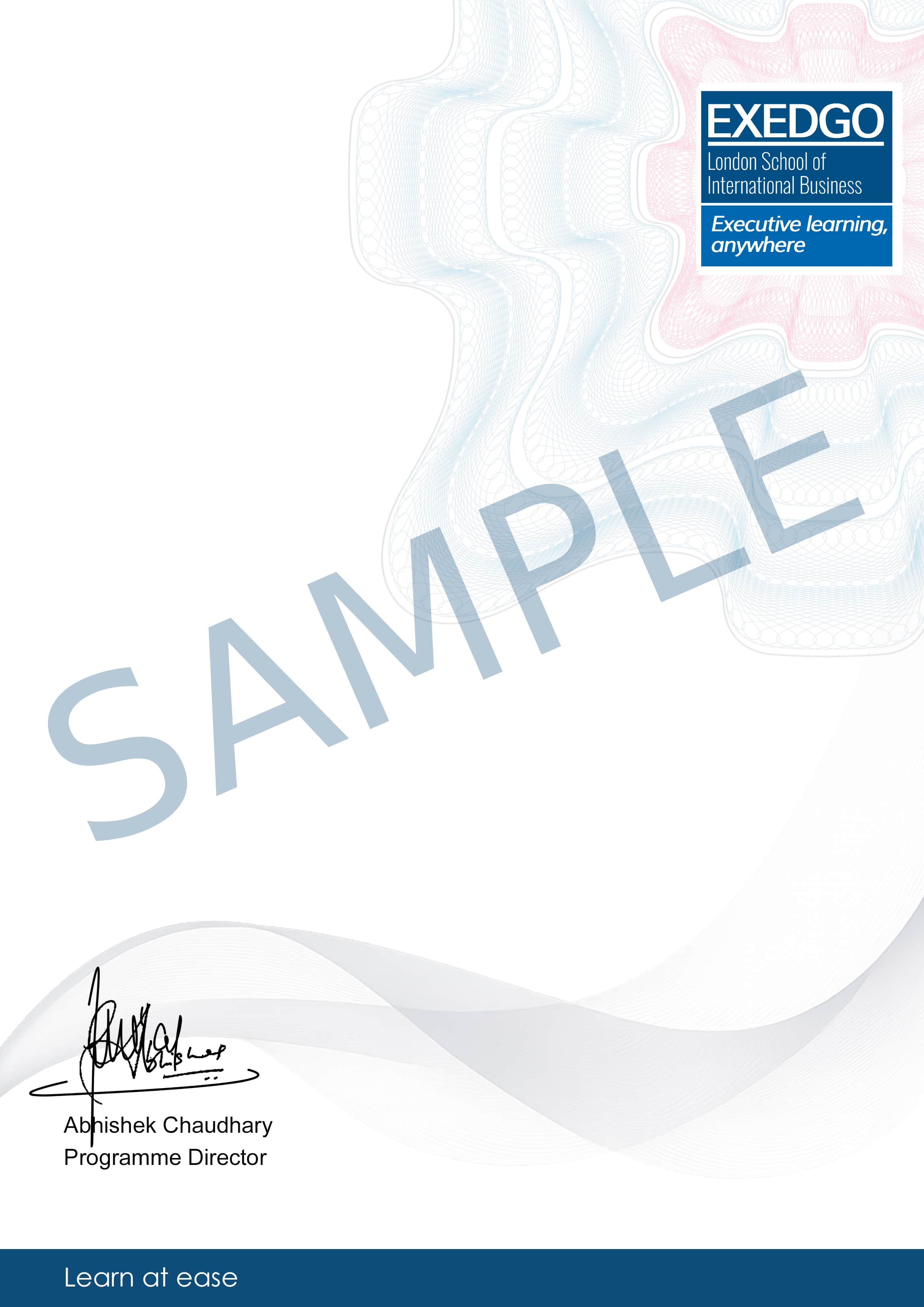
Upon successful completion of this course, you will receive a certificate similar to the one shown below:
No specific prior qualifications are required. However, basic literacy and numeracy skills are essential for successful completion of the course.
The course is self-paced and flexible. Most learners complete it within 1 to 2 months by dedicating 4 to 6 hours per week.
This course is not accredited by a recognised awarding body and is not regulated by an official institution. It is designed for personal and professional development and is not intended to replace or serve as an equivalent to a formal degree or diploma.
This fully online programme includes comprehensive study materials and a range of support options to enhance your learning experience: - Online quizzes (multiple choice questions) - Audio podcasts (expert commentary) - Live student support via chat The course offers maximum flexibility, allowing you to study at your own pace, on your own schedule.
Yes, the course is delivered entirely online with 24/7 access to learning materials. You can study at your convenience from any device with an internet connection.
Foundations of Residential Childcare Management
This course provides a solid foundation in residential chil…
Human Resources Management in Healthcare
This course offers an in-depth exploration of Human Resourc…
TESOL Grammar and Vocabulary Instruction Best Practices
This course delves into the best practices for TESOL Gramma…
Crisis Management in Adult Care Leadership
This course provides a deep understanding of Crisis Managem…
Disclaimer: This certificate is not intended to replace or serve as an equivalent to obtaining a formal degree or diploma. This programme is structured for professional enrichment and is offered independently of any formal accreditation framework.